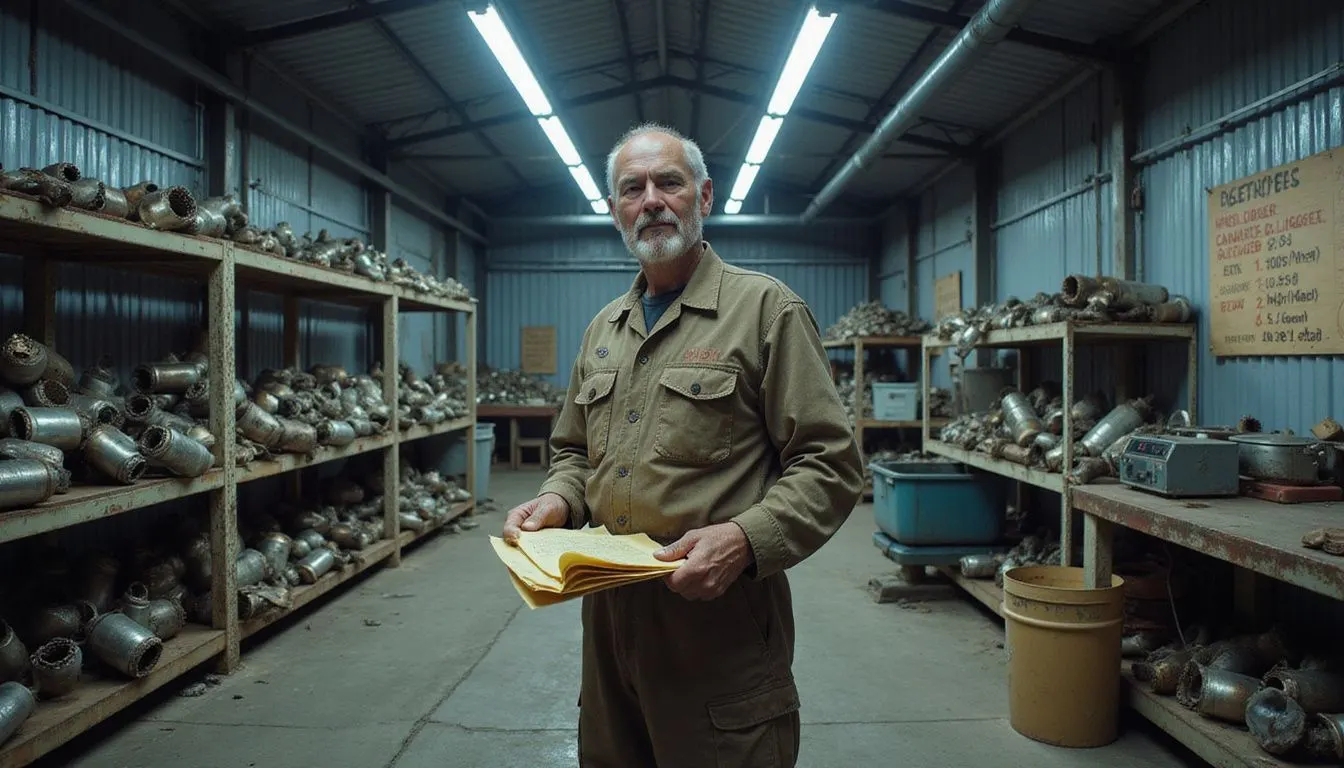
We buy scrap catalytic converters at our yard for between R800 and R5,500, depending on the platinum, palladium, and rhodium content inside your unit. We test each converter with XRF analysis, then weigh and grade it on the spot and pay you the current market rate. Bring your ID and proof of ownership.
On this page
Calculate what your load is worth
Pick the grade, enter the weight, and get an indicative rand range from our current rates — then email or WhatsApp the estimate to us for a verified, weighbridge-confirmed quote.
Estimate your value
What's your catalytic converter worth?
A converter is priced per unit on the platinum, palladium and rhodium in its honeycomb — not its weight. Pick the closest match for an indicative range, then send a photo and serial number for a firm quote.
Indicative value (per unit)R1 500–R5 000
Common mid-size petrol converters. A guide only — the firm figure depends on the identified PGM content.
Pick the closest match:
What affects your price
Value comes from the grams of platinum, palladium and rhodium in the honeycomb — not the weight of the unit.
Larger petrol, 4x4, luxury and diesel units carry more PGM and pay more; a gutted or empty shell is worth only its steel casing.
A whole, undamaged unit with a readable serial number quotes higher than a broken case or loose ceramic.
Value swings daily with PGM prices and the rand exchange rate — send a clear photo of the unit and its serial number for a firm quote.
Example: a standard car (foreign / OEM) converter is indicatively R1 500–R5 000 per unit, depending on its PGM content.
Introduction to Catalytic Converter Prices
Most vehicle owners only think about their catalytic converter when the check engine light comes on. By then, the cost can feel like a shock.
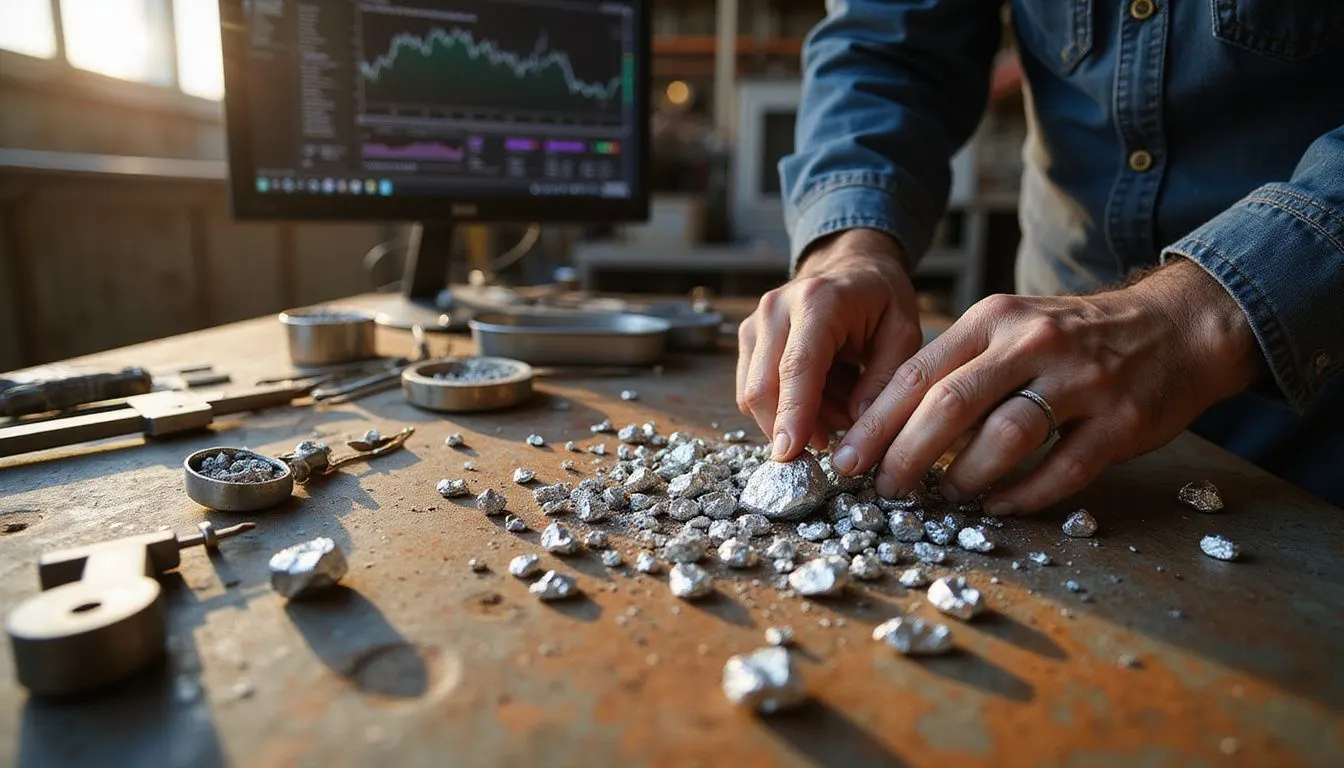
A skilled worker examines precious metal samples on an industrial workbench.
The precious metals inside your converter, platinum, palladium, and rhodium, have real market value that moves every single day. Understanding what drives catalytic converter prices puts you in a much stronger position, whether you are planning a repair or looking to sell your scrap catalytic converter to us here.
Prices are not random.
This guide covers the key factors that push converter values up and down, explains how scrap pricing works in practice, and walks you through exactly how to get the best return when you are ready to sell it to our yard.
Quick Facts & Key Takeaways
Platinum, palladium, and rhodium inside catalytic converters drive prices based on global market demand and daily fluctuations.
Luxury and performance vehicles often use converters with higher precious metal content, and we pay premium scrap prices for them at our yard.
Scrap catalytic converter value depends on metal grade, weight, cleanliness, and current market rates, which shift constantly throughout each week.
You must comply with the Second-Hand Goods Act and verify ownership before selling any catalytic converter, so bring your ID and proof of ownership.
Ask us for our current rates before you sell — we weigh, grade, and pay you the best market rate for your converter here at our yard.
Key factors affecting catalytic converter prices
Several forces shape what a catalytic converter is worth. Precious metals like platinum, palladium, and rhodium drive values up or down based on global market rates. The vehicle make, current supply levels, and our local market all play a role too.
What precious metals influence catalytic converter costs?
Platinum, palladium, and rhodium drive catalytic converter costs. These three precious metals form the core of every exhaust system component that reduces harmful emissions.
Each metal performs a specific job inside the converter:
Platinum converts carbon monoxide and hydrocarbons into safer substances
Palladium handles similar pollution control tasks with high efficiency
Rhodium drives further chemical reactions that clean exhaust gases
Our current scrap metal prices shift based on the grade and weight of these metals inside your converter. The cleanliness of the unit matters too. A dirty catalytic converter fetches less money than a clean one.
We use XRF and ICP analysis to measure metal content accurately.
The metals inside your catalytic converter hold real value. Knowing their worth protects your pocket.
Environmental regulations influence how manufacturers design converters worldwide. This directly affects precious metal usage and final pricing.
Direct-fit catalytic converters from different vehicle classes contain different precious metal ratios than universal catalytic converters. Universal units typically cost less because they hold fewer rare metals than brand-specific units.
Hybrid, bakkie and SUV converters are often in strong demand. That demand pushes scrap prices higher for those specific converter types, and we factor it into what we pay you.
How do car model and manufacturer affect prices?
Car model and manufacturer shape catalytic converter prices significantly. Hybrid, bakkie, SUV and utility converters can command higher scrap prices when they contain more valuable precious metals.
Premium vehicle ranges can fit converters with greater concentrations of platinum, palladium, and rhodium. Different manufacturers design converters with different ceramic compositions. These variations affect both replacement costs and scrap value.
Structural differences matter for labour costs too. Compact SUVs and common vehicle models feature different exhaust manifold configurations that require varying installation efforts. Hatchbacks and older vehicles can present distinct oxygen sensor placements that add to repair complexity.
We factor all these differences into our quotes. Your vehicle brand determines both the initial replacement cost and the scrap catalytic converter value when recycling becomes necessary.
Why do market demand and supply impact prices?
Market demand and supply directly shape what a catalytic converter is worth. Scrap metal prices move daily based on metal grade, weight, and cleanliness.
Precious metals inside converters become more expensive when buyers compete urgently for them. Global platinum, palladium and rhodium supply tightens and loosens over time, and those swings feed straight into local scrap prices. This is exactly why sellers who act during high-demand periods tend to earn better returns.
We track these price swings throughout each day. Always ask us about current rates for specific metals before you hand over your old converter.
Supply shortages push replacement prices higher for homeowners and businesses
When demand is strong, we can pay you better rates for your scrap
Buyers compete actively for quality inventory during peak periods
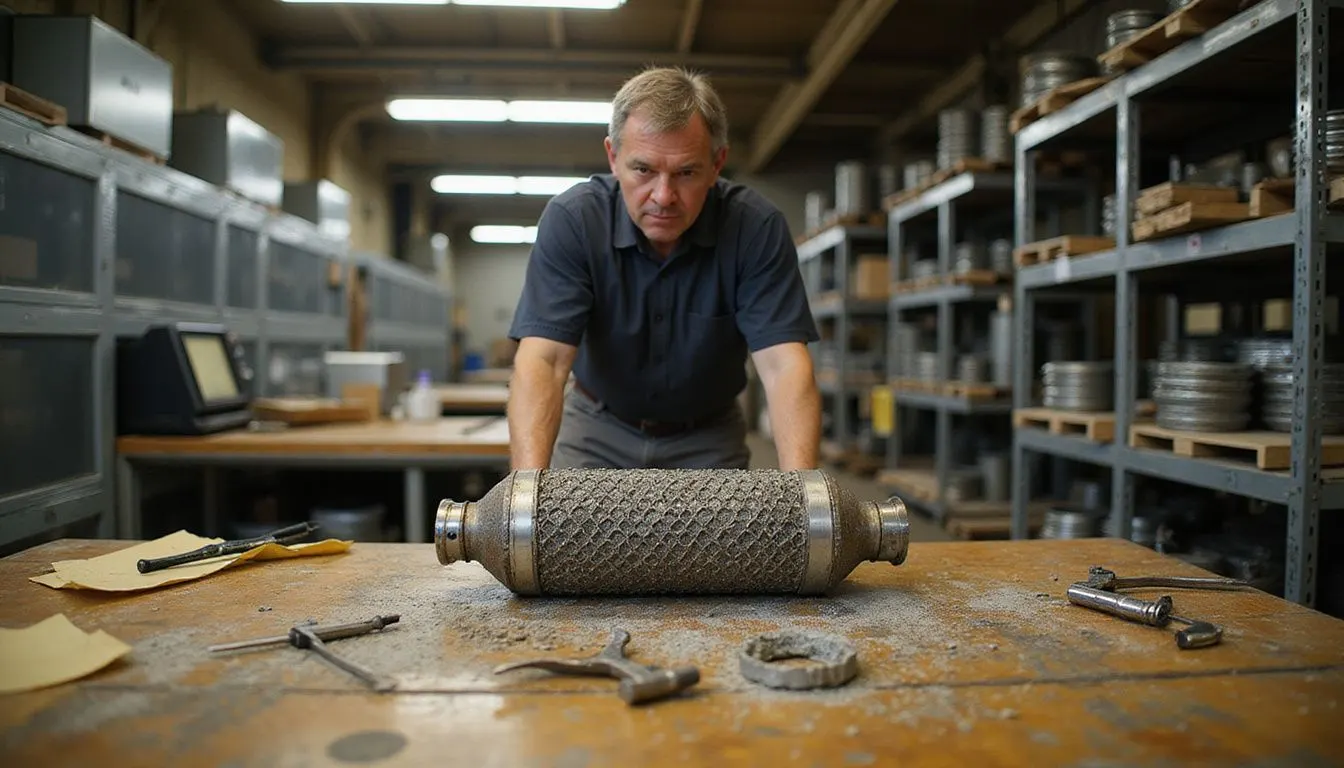
A partially disassembled catalytic converter rests on a cluttered workbench.
We monitor these trends closely to offer fair pricing to our customers. You gain better deals when supply exceeds demand in the local market, so timing your sale matters.
Price differences across car brands and models
Different car brands and models carry vastly different catalytic converter prices based on their make and engineering specifications. Your vehicle's manufacturer and year determine the precious metals inside, which directly affects both repair costs and the scrap value you receive when you sell to us.
What are the average prices of popular catalytic converters?
An OEM scrap catalytic converter currently fetches between R800 and R5,500. Dealership replacement costs for brand-new units can exceed R30,000.
That gap is significant. Knowing where your converter sits within the scrap range helps you set realistic expectations, and you can estimate your load with our calculator before you contact us.
Several factors place your unit at the lower or higher end of the scale:
Vehicle make and model, with luxury brands yielding more
Precious metal content by grade and weight
Physical condition and cleanliness of the unit
Current market rates for platinum, palladium, and rhodium
Converter Category
Value Range (rand)
Key Driver
Low-grade OEM scrap unit
R800 - R1,500
Lower precious metal content, older vehicle
Mid-grade OEM scrap unit
R1,500 - R3,000
Standard metal content, popular model
High-grade OEM scrap unit
R3,000 - R5,500
Luxury brand, high precious metal load
Dealership replacement (new)
R30,000+
OEM parts, fitted, includes labour costs
The difference between scrap value and replacement cost is worth understanding. If your vehicle is older and a repair approaches its total value, selling us your scrap converter and sourcing a quality used replacement can be a practical move for homeowners and businesses alike.
Which manufacturers have high-value catalytic converters?
Premium car brands typically fit catalytic converters with higher precious metal content. This means their scrap value and replacement cost run much higher than standard vehicles.
The table below shows manufacturers with catalytic converters that command top prices when we buy them for recycling.
Value tier
Vehicle type
Key Features
Market Value Indicator
Standard vehicles
Luxury sedans and sports cars
High platinum and palladium content; compact design
Premium tier
Standard vehicles
Executive and performance vehicles
Superior catalyst material; dual-unit systems common
Exclusive catalyst technology; maximum precious metals
Ultra-premium tier
Ultra-premium supercars
Ultra-high-performance supercars
Specialised materials; limited production units
Ultra-premium tier
Luxury manufacturers invest more in catalytic converter technology than mass-market producers. Their vehicles require stricter emission control systems. Premium brands use catalysts with greater concentrations of platinum, palladium, and rhodium, and those metals fetch higher prices when you scrap them with us.
Understanding catalytic converter scrap prices
At our yard we extract precious metals from old converters and pay you based on what we find. The scrap value shifts with market prices for platinum, palladium, and rhodium, so the same converter can earn different amounts on different days.
How is the scrap value of a catalytic converter determined?
Metal grade, weight, and cleanliness are the three main factors that shape your catalytic converter's scrap value. Daily fluctuations in scrap metal prices add a fourth variable that changes throughout each week.
Labour costs factor into recycling operations too, affecting what we can offer you. Always ask us for today's rates before you agree to a price.
Metal composition drives more of the final quote than anything else. A standard OEM catalytic converter typically yields a few grams of platinum and palladium, alongside a smaller amount of highly valuable rhodium. These are the gram weights that our XRF scanner measures, which is why size and OEM status influence your quote so directly. Larger batches often earn better rates per unit too.
We assess cleanliness before we quote a price. Contamination reduces value. Clean, uncut units consistently earn better offers than crushed or contaminated units in the same grade band. Sorting and cleaning your converters before selling can shift offers materially, even within the same car model group.
Clean, well-prepared scrap earns more. That preparation is entirely within your control.
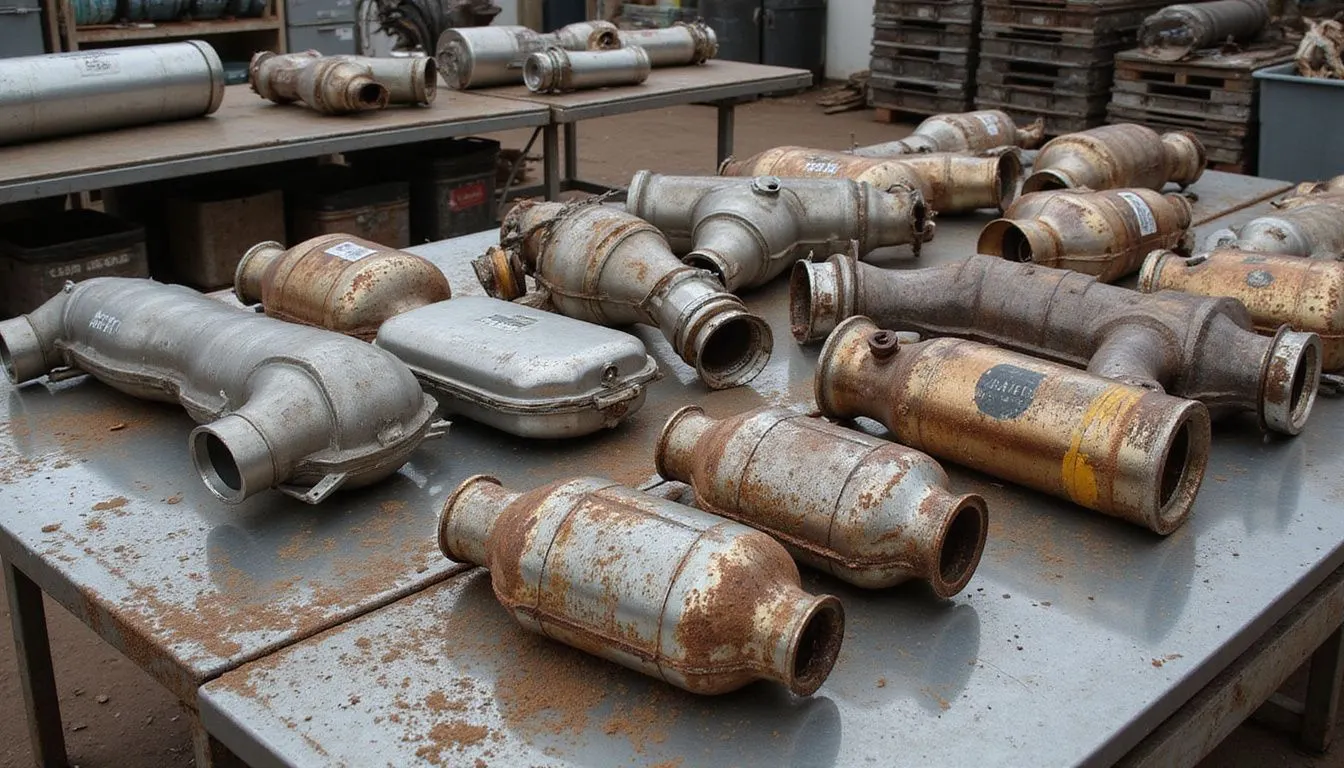
A bustling automotive recycling facility with disassembled catalytic converters.
The environmental impact of proper catalytic converter recycling makes these units valuable assets worth selling to a licensed yard like ours. Prepare your scrap carefully and bring it to us to secure the best deal in your area.
What are the current trends in recycling and resale prices?
Understanding how we determine scrap value gives you a foundation for recognising market shifts. Current trends in catalytic converter recycling and resale prices show important changes 's scrap metal sector.
Recycling Trend
Impact on Resale Prices
Relevance Residents
Rising demand for precious metal recovery
Platinum, palladium, and rhodium values push converter prices upward
Homeowners gain better returns when selling used converters locally
Increased industrial recycling capacity
More buyers enter the market, creating competitive pricing structures
Businesses find multiple purchasing options within the region
Growth in automotive aftermarket demand
Used converters fetch higher prices from manufacturers needing components
Contractors benefit from steady buyer interest throughout the year
Expansion of certified recycling facilities
Quality assurance standards push premium prices for verified inventory
Factories access reliable supply chains with transparent pricing models
Fluctuating global commodity markets
Metal price volatility creates seasonal peaks and troughs in converter values
Recycling businesses track international trends to optimise local selling windows
Development of advanced sorting technology
Improved extraction methods increase material yields and profitability
Local processing operations enhance competition and fair pricing practices
Strengthening environmental regulations
Compliance costs raise baseline prices for legitimately recycled converters
Ethical sellers command trust and premium rates markets
Platinum group metals remain the primary value driver for catalytic converter recycling across all of these trends. Palladium prices shift with automotive production cycles. Rhodium availability affects overall converter valuations significantly. Your converter's worth depends on all these interconnected market forces, which is why staying informed pays off.
How can I sell my catalytic converter?
Selling your catalytic converter requires you to understand the legal rules and gather the right paperwork first. You can then bring it straight to us — we pay fair prices based on current market rates, ensuring you get the best value for your part.
What legal considerations should I know before selling?
You must verify that you own the catalytic converter before you sell it. Stolen converters carry serious legal risks for both you and us as the buyer.
Under the Second-Hand Goods Act (Act 6 of 2009), you must provide a valid ID and official proof of vehicle ownership before completing any transaction. We require these documents by law, not as a formality. Make sure you have both ready before you come to our yard.
Keep accurate records of every sale you make. These documents protect you against future disputes or legal claims.
We hold a valid operating licence, and you are welcome to confirm it
Ask us how we calculate the value of your specific converter
Request a written quote before you agree to anything
Take your time to weigh up our written quote before making your final decision
Legitimate market rates vary based on labour costs and material values. We are happy to talk you through how current platinum, palladium, and rhodium prices feed into our quote, so you can see exactly how we arrive at a fair figure and spot unfair pricing quickly.
Why sell your converter to us?
residents and businesses can sell their catalytic converters directly to us. As a licensed local yard, we pay competitive prices for your used parts and handle the whole process in one place.
Selling to us
We are a local scrap metal yard specialising in precious metal recovery. We are fully licensed and use XRF analysis for transparent pricing, so you get a clear quote from us on your first visit.
If you run an authorised car dismantler or auto salvage yard, we buy your used catalytic converters regularly and understand fair pricing for different vehicle makes and models.
We handle factory and industrial volumes too. We process large quantities and offer competitive rates for bulk loads.
Local contractors and mechanics sell us used catalytic converters from resale and repair work. Building an ongoing relationship with our yard creates steady selling opportunities for the trade.
Refineries and specialist recovery
You do not need an online listing to get a secure deal and an instant quote — we quote you directly and handle the transaction on the spot.
We work directly with precious metals refineries that process catalytic converters professionally. Those refineries extract platinum, palladium, and rhodium, paying based on metal content and current market rates, which is how we set what we pay you.
You also avoid the fraud risk of unverified online sellers. As a licensed local yard we verify ownership and deal with you face to face.
We are committed to sustainable practices and proper material recovery, so your converter is recycled legitimately when you sell it to us.
The process is simple: verify ownership, clean your converter, then bring it to us with your paperwork. We will weigh, grade, and quote it transparently, and a clean, well-prepared unit with full documentation consistently earns a better offer than a crushed, undocumented one.
Conclusion
Selling your catalytic converter requires smart timing and accurate information. Get in touch with us today for current market rates on your specific materials, and ask about our battery and lead prices while you are at it.
Clean, properly sorted converters fetch better prices, and we value quality preparation. Give us details about quantity, condition, and metal composition when you ask for a quote.
Your next step is simple. Get in touch with our yard and start turning your old catalytic converter into cash.
Frequently asked questions
1. What affects catalytic converter prices?
The age, make, and model of your vehicle affect the price. Precious metals inside the converter, such as platinum and palladium, also drive up the cost, with a typical converter containing a few grams of these metals.
2. How much does a catalytic converter replacement cost?
Prices typically range from R2,500 to R15,000 for most vehicles. Labour costs and the type of converter fitted will affect the final bill.
3. Why are catalytic converter prices so high?
Catalytic converters contain rare metals that are costly to source. High demand and limited supply push prices up further.
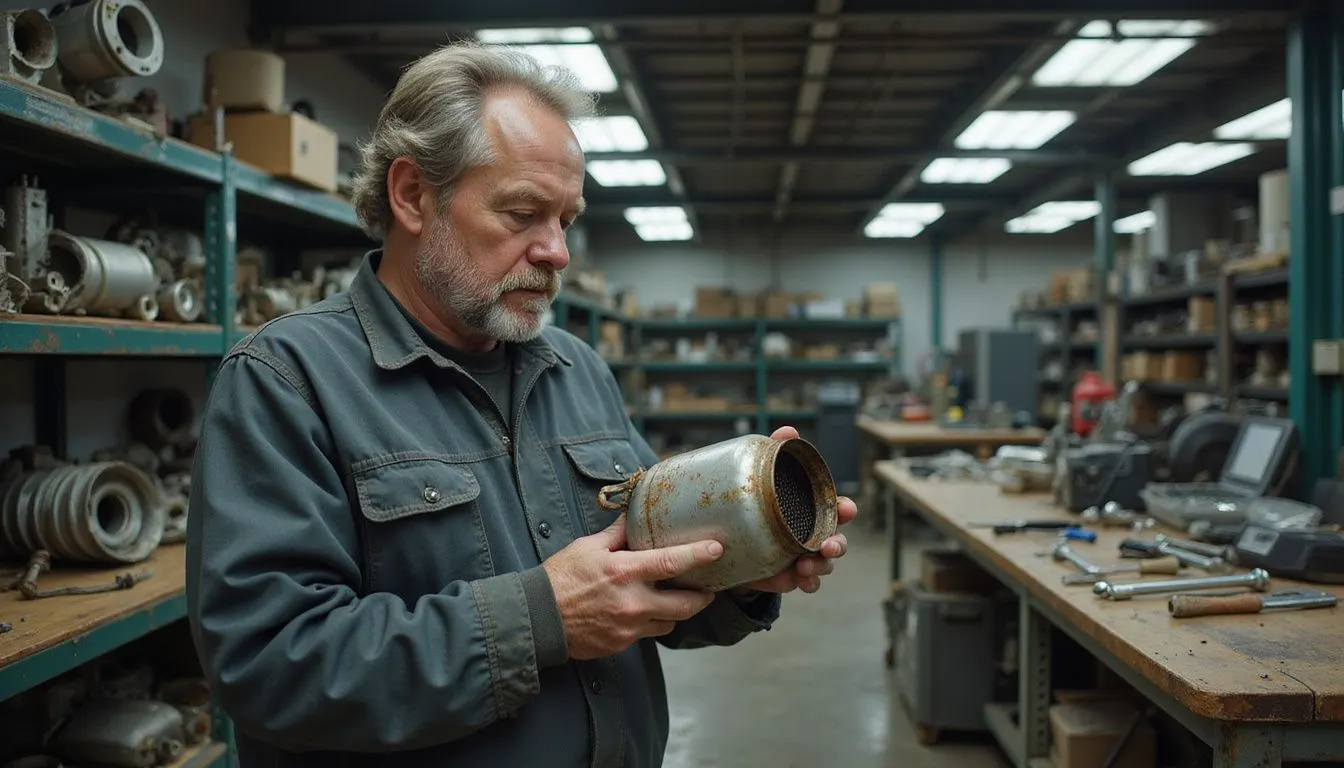
A weathered man stands in an industrial scrap yard, clipboard in hand.
4. Is it worth buying a second-hand catalytic converter?
A used converter may cost less upfront, but it could fail sooner. New converters typically come with a 12 to 24-month warranty. Buying a new, quality-tested unit is often the safer choice for long-term reliability.
Know what your scrap is worth.
Request a fast quote, check indicative rates, and we'll weigh your load and pay you same-day EFT — we collect.
Looking for scrap catalytic converters for sale? Send the grade, quantity and specification you need to confirm stock and get a sales quote. We also buy suitable scrap: share photos, material details and approximate weight for a buying quote. Guide buying rates shown on this page are not retail sales prices.
Indicative scrap buying rates are guidance, not a guaranteed offer. Grade, verified weight, collection availability and any charges are confirmed with you before an arrangement is accepted.