
Trust
Secure Data & E-Waste Destruction Certificates
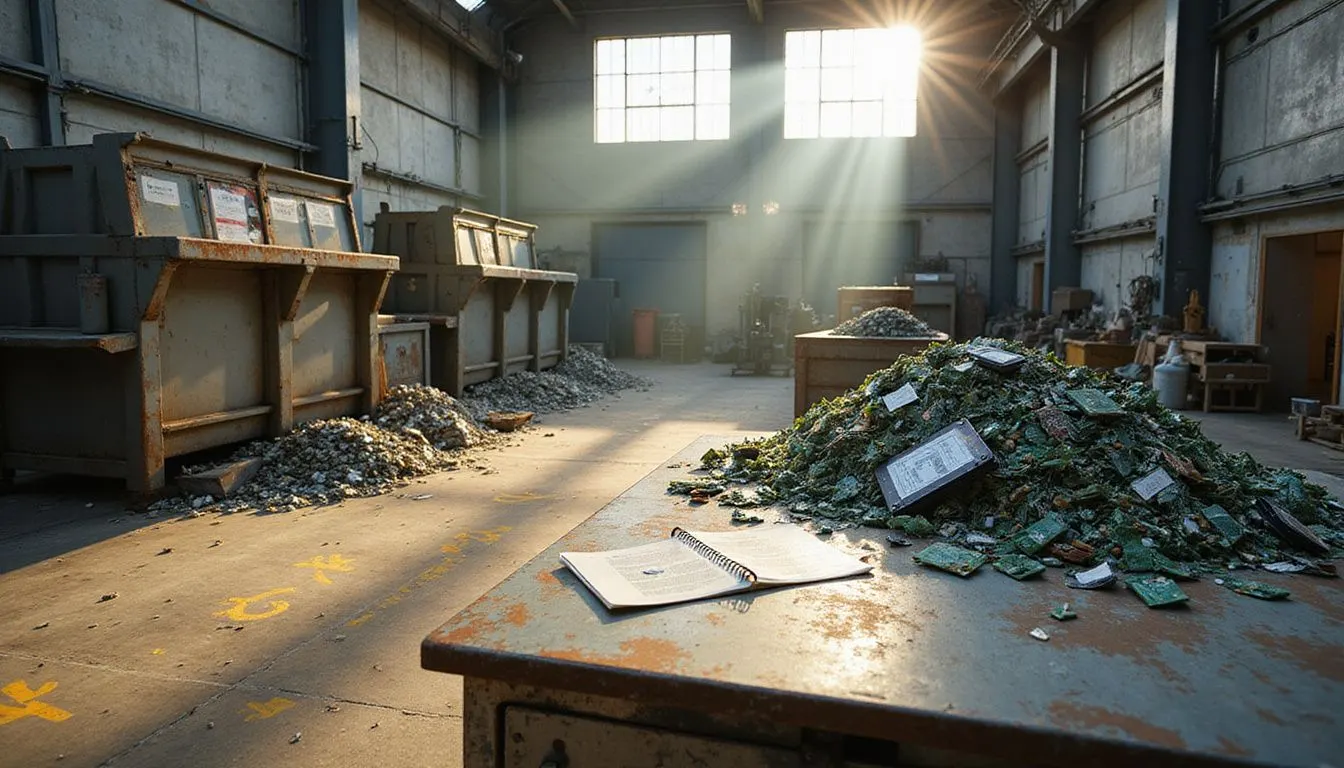
We destroy your data and e-waste securely at our yard, issuing certificates that prove POPIA compliance with witnessed destruction and tracking.
Quick answer
Yes, we handle secure data destruction and issue a certificate of destruction as proof. We permanently destroy hard drives, phones, and old computers using approved methods like degaussing and micro-shredding, then document every item with serial numbers, photographs, and chain-of-custody records. We also offer witnessed destruction and real-time inventory tracking so you can verify your data is gone.
On this page
Old computers, phones, and hard drives hold sensitive data long after you stop using them. Secure data destruction is the process that permanently removes that information from your devices.
Most businesses and homeowners know responsible disposal matters. The real challenge is proving it actually happened — and that proof is exactly what a certificate of destruction is for.
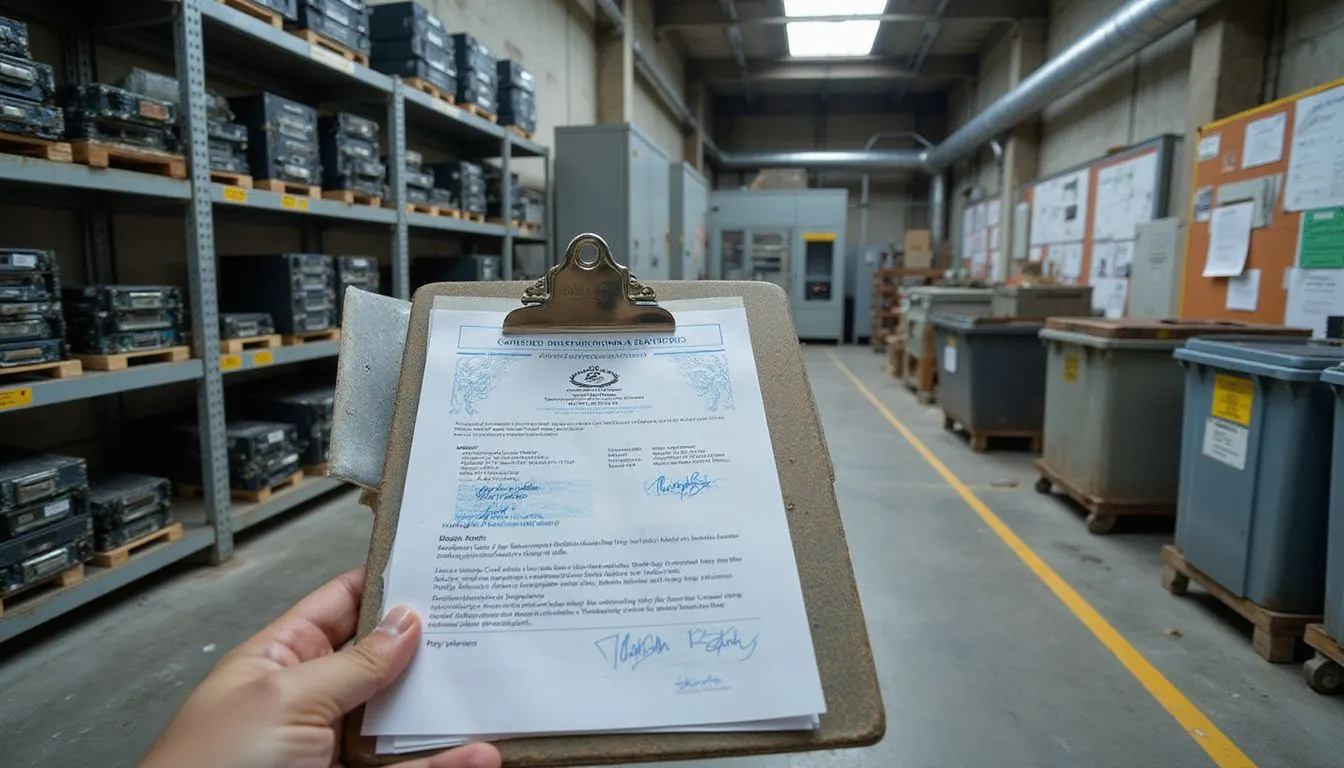
Without documented evidence, you cannot show regulators, auditors, or insurers that your data was handled correctly. This guide covers what data and e-waste destruction certificates are, why they matter for your compliance, and what we provide as your recycling yard.
Quick Facts & Key Takeaways
- A destruction certificate proves your sensitive data was destroyed using approved methods such as degaussing or physical shredding, supporting compliance with 's Protection of Personal Information Act (POPIA).
- We record every item destroyed with serial numbers, photographs, and a chain-of-custody trail from collection through to final processing.
- We offer witnessed destruction and inventory tracking, so you can see for yourself that your equipment was destroyed.
- Under 's waste laws, e-waste is a priority waste stream with Extended Producer Responsibility rules that require trackable disposal.
- We recover valuable materials from your old equipment and keep hazardous material out of landfill.
What are secure data and e-waste destruction certificates?
A secure data destruction certificate is official proof that sensitive information has been destroyed safely and completely. It confirms that proper procedures were followed to destroy hard drives, solid-state drives, and other storage media.
The certificate records what was destroyed, when it happened, and who supervised the process. That creates a chain of custody tracking your equipment from collection through to final disposal, using recognised data-sanitisation methods such as those set out in NIST SP 800-88.
Under 's National Environmental Management: Waste Act (NEMWA), e-waste is classified as a priority waste stream with Extended Producer Responsibility rules that require trackable disposal. So a destruction certificate is not simply best practice — proper, documented disposal is expected under law.
An e-waste destruction certificate serves a related purpose. It confirms that your electronic waste went through proper recycling rather than ending up in landfill, that hazardous materials were handled correctly, and that valuable components were recovered from your old IT equipment — the boards and metals behind our e-waste and PC board prices.
Together, data destruction and e-waste recycling certificates protect your reputation, your data, and the environment.
Why are certificates important for data protection?
A destruction certificate is your documented evidence that you handled sensitive information properly. It shows regulators and clients that data was destroyed using approved methods and kept safe from breaches.
How certificates support compliance
In, businesses, factories, and contractors need to show they handle IT disposal correctly. A certificate captures the detail that makes that possible:
- The certificate records every item destroyed and the method used.
- It captures the date, time, and supervising operator for each session.
- It shows the full chain of custody from collection to final disposal.
- Witnessed destruction adds a signed statement confirming completion.

Under the Protection of Personal Information Act (POPIA), organisations must dispose of records containing personal information securely. POPIA is enforced by the Information Regulator, and non-compliance can carry an administrative fine of up to R10 million. Your destruction certificate is your documented proof that you took proper steps to meet those obligations.
Homeowners and small businesses gain the same peace of mind knowing their personal information received proper handling. And if a data breach is ever alleged, your certificate is solid evidence that you took reasonable steps to prevent it — which is why the detail on it matters. A reliable certificate should carry item-level serial numbers and photographic evidence, not just a generic "storage unit" line, so every device can be reliably matched to its destruction record.
Benefits of e-waste destruction certificates
E-waste destruction certificates show that your electronic disposal was handled responsibly, keeping material out of landfill and supporting recycling.
Supporting responsible disposal
E-waste that ends up in landfill can leach hazardous material into local soil and water, which is exactly why tracking where your e-waste goes matters. A destruction certificate accounts for every item you send for disposal.
When you sell your e-waste and computer scrap to us, material is sorted and recovered rather than dumped:
- Precious metals, plastics, and glass are processed correctly rather than lost.
- Working second-hand goods can be refurbished and reused, extending product life.
- Hazardous substances are handled to protect local soil and water.
- Certified destruction supports material recovery and responsible waste management.
Homeowners and businesses alike contribute to a cleaner environment each time they choose certified e-waste destruction, and factories and contractors gain the reassurance that their old IT equipment was disposed of properly.
Key features of a reliable destruction certificate
A reliable certificate shows clear records of what was destroyed and when. When you evaluate one, check that it includes:
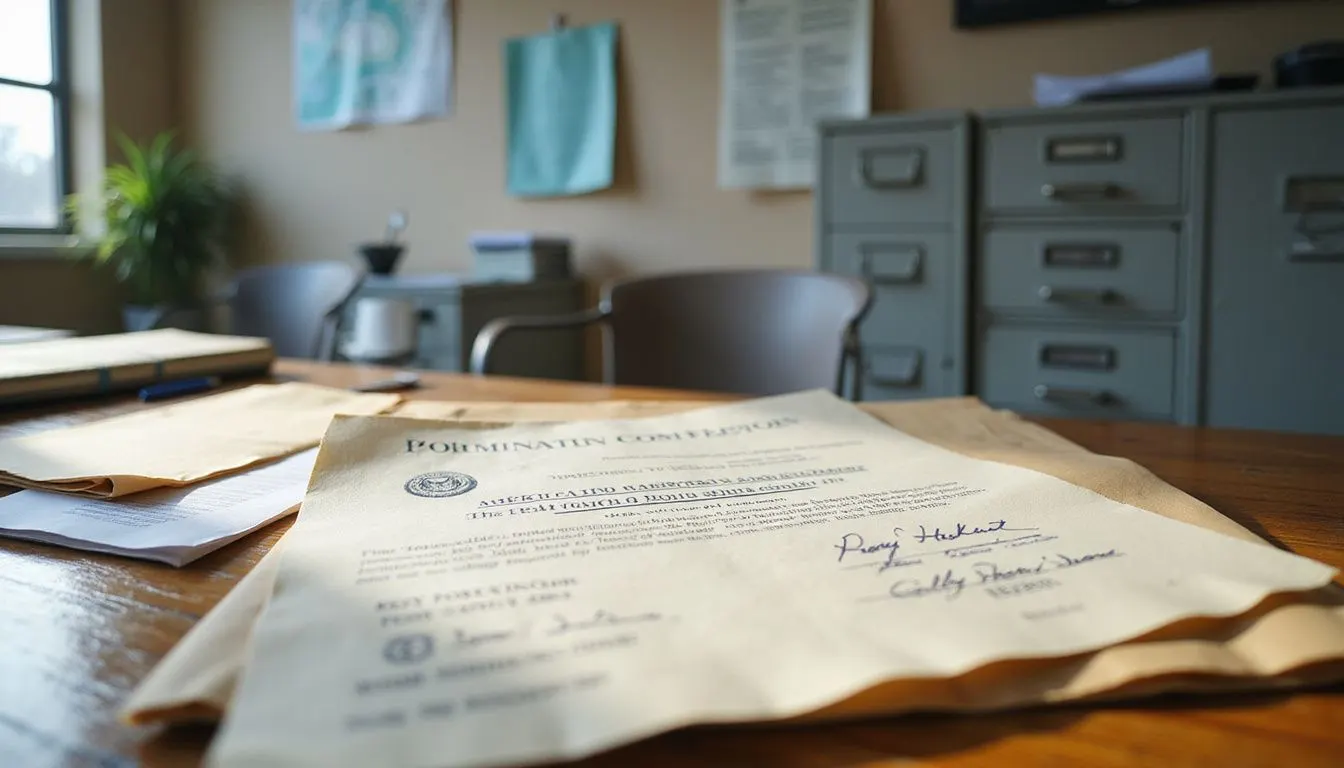
- Itemised serial numbers for every device.
- Photographic evidence of each item before destruction.
- A signed witness statement from a supervising operator.
- The specific destruction method recorded per device.
Inventory tracking
Inventory tracking shows where your equipment sits at each stage. Every device is logged on intake, given a tracking reference, and moved through the process to destruction, so a complete record exists from arrival to a final destruction timestamp. That record is what backs up the certificate we issue.
Witnessed destruction
Witnessed destruction gives you direct oversight of the process. We destroy your items in front of you or your representative, removing any doubt about what happens to your sensitive materials. A typical witnessed session runs like this:
- You sign the chain-of-custody form and your equipment is bar-coded.
- Each item is scanned into a manifest.
- Every device is photographed before destruction begins.
- You or your representative watches the equipment being destroyed.
- We record the destruction method, timestamp, and operator for each item.
- We issue your certificate, listing each item, the method used, and the date completed.
Conclusion
Secure data and e-waste destruction certificates protect your business and the environment.
They prove your electronic waste was recycled responsibly and your sensitive data destroyed safely, so you can show clients and regulators that you handled it properly. Request a destruction certificate when you arrange your e-waste collection, and ask about witnessed destruction and inventory tracking so you can verify your old equipment was handled with the care it deserves.
Frequently asked questions
1. What is a secure data destruction certificate?
It is an official document proving your data was permanently destroyed using recognised methods such as those in NIST SP 800-88. It confirms the information cannot be recovered and gives you documented proof of proper disposal.
2. Why do businesses need an e-waste destruction certificate?
To show they disposed of devices containing personal data securely, as expected under the Protection of Personal Information Act (POPIA). It protects your company and demonstrates to clients that you handle information responsibly.
3. What information does a data destruction certificate include?
The date of destruction, a description of the destroyed items with serial numbers, the method used (such as shredding or degaussing), and the details of who carried out and supervised the work.
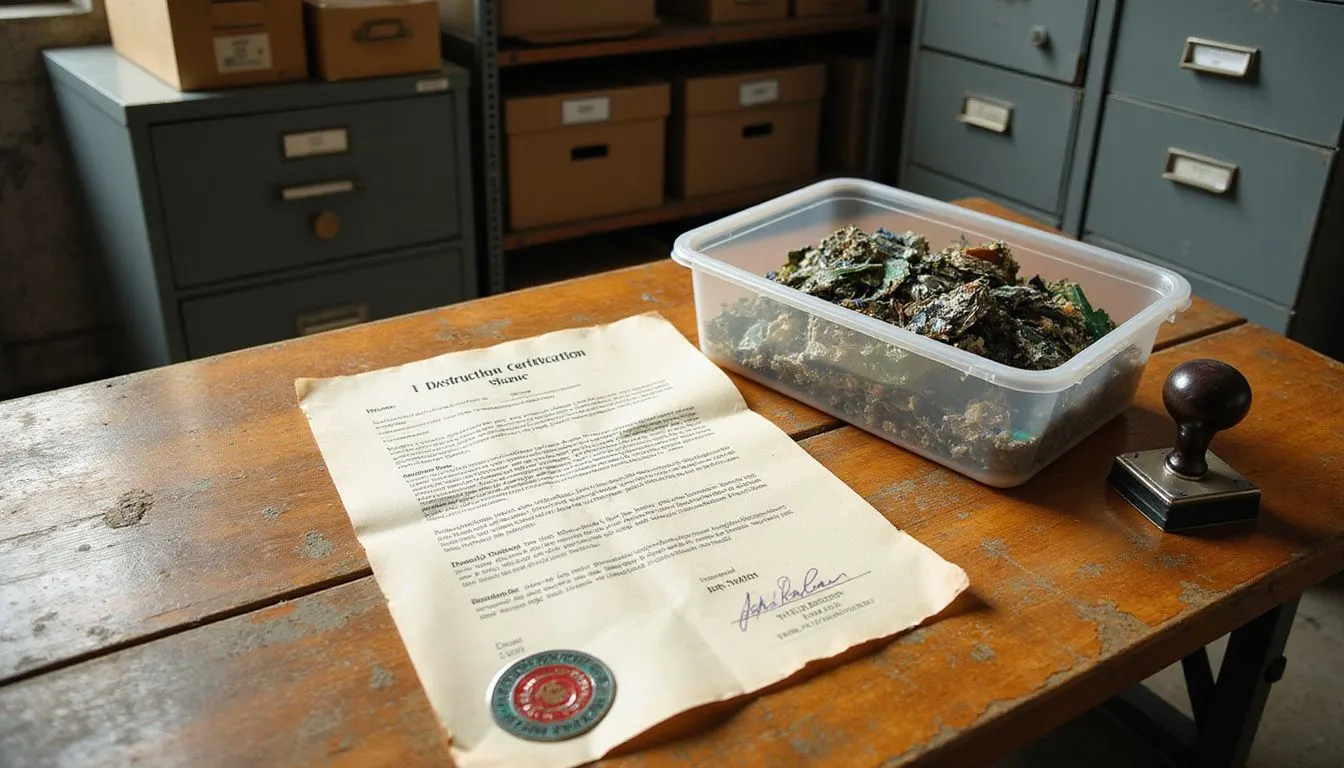
4. Who issues secure data and e-waste destruction certificates?
We issue them after completing the destruction at our yard, following recognised data-sanitisation methods and keeping a full chain-of-custody record for every item.
Know what your scrap is worth.
Request a fast quote, check indicative rates, and we'll weigh your load and pay you same-day EFT — we collect.
Get a QuoteBuy and sell scrap metal with Reclaim Metal Traders
Enquire about scrap metal for sale with your required material, grade and quantity to confirm stock and sales prices. We also buy suitable recyclable scrap: send photos, material details and approximate weight for a buying quote. Transport arrangements and charges are confirmed separately.
Metals we buy · Scrap buying guide prices · Buy or sell — request a quote